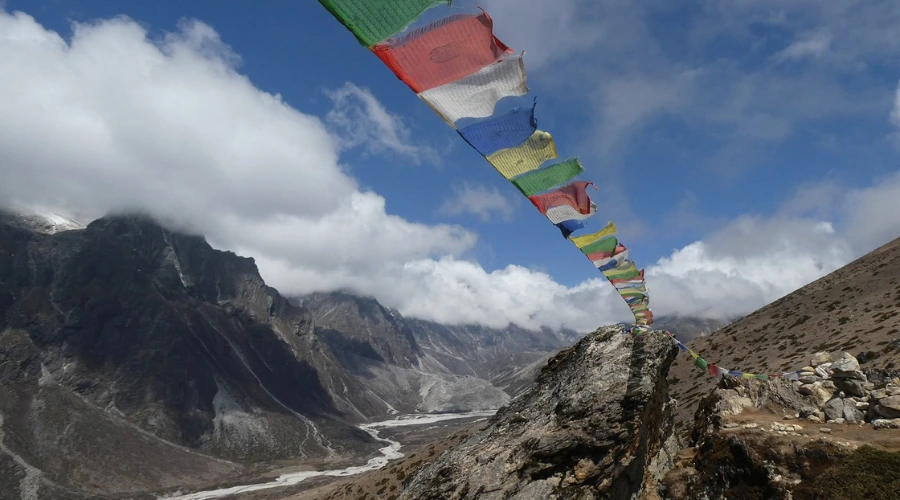
Everest Base Camp trek is characterized by a terrain that has always been occupied by Sherpa clans throughout many centuries past. The culture of mountaineering had not existed in this area before, but Sherpas were already knowledgeable about the terrain.
They knew which paths could be used at what time of the year. They knew how to recognize signs of approaching bad weather. They knew which herbs would help heal their wounds and which trees indicated safe water to drink. This knowledge has not been lost after the advent of tourism.
Reading the Mountains
Ask an old Sherpa about the weather forecast, and you will receive the answer which cannot be received by any weather app. They study cloud formation over particular mountains. They understand the direction change of the wind. They study the behavior of yaks because they know that the animals are aware of the pressure change before people.
It helps to save lives on the path. If the guide tells about the change of weather, the trekkers trust him or her. For example, if the clouds appear around Nuptse in the morning, it means that there will be snow in the afternoon. If the wind comes from the west, it means that there will be clear weather.
The Yak and the Land
The yaks serve as pack animals but much more in Khumbu Valley. Yaks’ breeding and health-related knowledge are traditionally passed on from one generation to another.
Skilled yak herders understand the optimal pastures and months for their use, have the skills to heal various diseases through local herbs and how to train yaks to carry heavy loads without causing harm to the animal.
These skills are important on the practical side but have their cultural significance too. The number of yaks in a particular household used to reflect its wealth. Even now, they serve as a means of transportation in areas where no vehicles can get. Thus, traditional knowledge remains important.
Building With What the Mountain Gives
This is all about survival in Sherpa architecture. Houses are made of stone and wood; they are earthquake-resistant and have good heating. Their walls are thick; windows are small. Roofs are flat to catch water and resist wind.
The skills of making houses are passed from generation to generation inside families. Young people know from their fathers how to choose stones, place them without using any mortar and face a house to prevent it from the wind. These are not lessons at schools but practical experience during many years.
The lodges that are made nowadays use some of the same methods. The best of them use both traditional building methods and new materials. The walls made of stone provide heating; panels placed on the roof give energy for lights.
Food as Memory
The Sherpas’ cuisine is based on what grows at high altitudes. Meals consist mostly of potatoes, barley, buckwheat, and dairy products of yaks. Riki Kur, a potato pancake, is often served for breakfast. The Sherpas eat tsampa, roasted flour made of barley, along with butter tea. These meals are not only food, but they carry memories.
Recipes of the dishes have been passed down from generation to generation by women. The mother instructs her daughter how to prepare the sherpa stew. She tells her which herbs are harvested during spring and stored for winter, and she teaches how to churn butter out of yak’s milk. All the secrets of cooking are kept not in cookbooks, but in the hands of the women who do all these things every day.
For the trekkers, consumption of these meals means much more than just getting acquainted with a new culture.
The Role of Monasteries
However, monasteries of the Khumbu region also function as places of learning. Monks keep various documents, ritual books, and medical practices that are several centuries old.
The biggest monastery of the region, Tengboche Monastery, had been an object of worship of local people for many generations. First, the monastery was ruined by an earthquake in 1934, and then it was rebuilt.
In 1989, the monastery was destroyed again and rebuilt once more. After each disaster, the community tried to rebuild its sanctuary. The knowledge on how to do it, how to consecrate a new building, and how to organize various ceremonies was passed from generation to generation within the monastic community.
The young monks continue to study traditional medicine, astrology, and philosophy. They memorize texts that were passed to them for hundreds of years. However, these texts are constantly developing. Today, monks use the Internet for their studies and establish contact with monks from other monasteries of the world.
What Trekkers Can Learn
But most trekkers who walk the Everest Base Camp Budget Trek are only concerned about the physical challenge of walking in the mountains. They concern themselves with elevation gain, distance covered, and acclimatization. This is understandable. But there is something else about this trip. And this is the knowledge which has sustained lives in this place for centuries.
Listen when a teahouse owner tells you about the weather when trekking. Listen when a guide tells you why the yaks graze in one spot instead of somewhere else. And listen when you have tasted sherpa stew and know that this meal has been perfected through the years of its preparation.
A Living Tradition
Knowledge in Khumbu is never static. This kind of knowledge is always evolving and dynamic. Children learn from their parents. Elderly narrate tales about the past generations. Knowledge changes with the arrival of new difficulties.
Mountains are slow to change. People living here have understood them through the years. This knowledge is not going to die anytime soon. People here will continue to pass down this knowledge to each other for generations.
Final Thoughts
There is a tendency to view traditional knowledge as a delicate artifact, one which must be carefully protected and preserved like a piece of art in a museum. This is not how it is in Khumbu. Knowledge in Khumbu is not kept in a museum but is constantly employed, changed, discussed, and handed down because it still works.
The Sherpa who can read the clouds has not substituted his knowledge for an app that will give him a forecast. Instead, he makes use of both. The family which builds using stones also puts up solar panels. The mother who teaches her daughter to make butter also sends her daughter to study in Kathmandu.
This is the simple but profound lesson of the trekking to the Everest Base Camp for trekkers. You come here for the mountains; you leave with an enhanced perception of how people live there. The path you travel was created by people who have learned from their predecessors. The teahouses where you rest were constructed using stones placed by father and son. The food you eat has recipes older than mountaineering.
The mountains will stand here forever. The knowledge of how to live in them is what turns the living into a possibility.