Soursop has serious attention in the recent years. A lot of individuals discuss it as an effective natural medicine. Whether the claims are exaggerated is a question to others. It is against this background that it is necessary to rewind and revisit the actual facts. The fruit is a tropical crop that has been in use in ancient diets. It is not ordinary to look at with its odd appearance, and taste good with its sweet-tart flavor. Popularity, however, does not ascertain medical value. A moderate perspective can make you see what it really gives. This informative paper will educate you on what Soursop is, how it finds application, what the researches have found about it and what the safety issues are.
Table of Contents
What is Soursop?
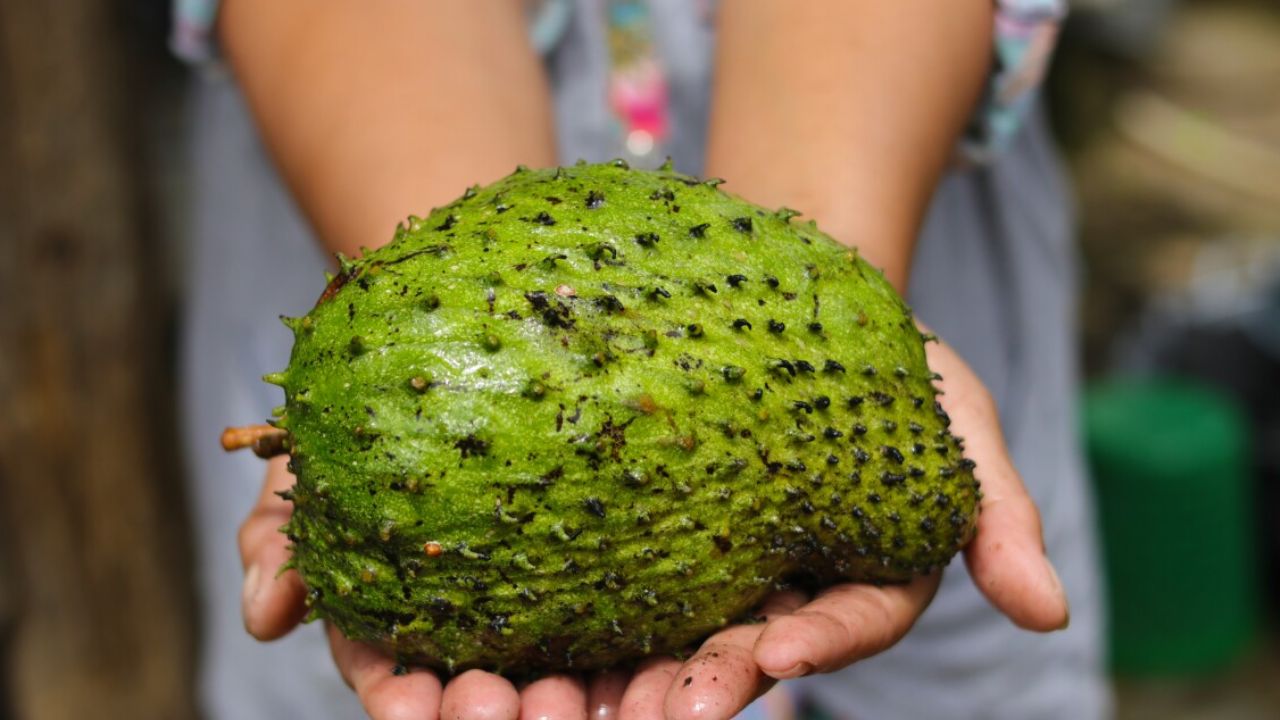
Soursop is a tropical fruit and has been found in warm parts of the world especially in Central American regions, South American areas, Caribbean areas, and Southeast Asia. It is also referred to as graviola and guanabana. It is distinctive and has a green cover skin with soft spines on its exterior and white pulp that is fibrous in nature. It has a sweet-sour taste that has been described as pineapple and strawberry mixed.
The increase in popularity of Soursop can be explained by the reasons that it is claimed to be healthy. Social media and other health blogs tend to recommend it as natural treatment to major diseases. But being popular does not necessarily mean being scientifically proved. Although the fruit is healthy, evidence-based medical research should not be mixed with traditional application and the claims people make on the internet.
Nutritional Value of Soursop: What Does It Contain?
Among the primary factors that Soursop is getting the attention is its nutrient density. It is not high calorie, but contains essential vitamins, minerals and plant compounds that aid in the general health. The fruit can be used as a healthy addition to a balanced diet when taken in its fresh form.
Below is a simplified overview of key nutrients found in one cup of fresh Soursop pulp:
| Nutrient | Health Role |
| Vitamin C | Supports immune function and skin health |
| Fiber | Aids digestion and supports gut health |
| Potassium | Helps regulate blood pressure |
| Magnesium | Supports muscle and nerve function |
| Folate | Important for cell growth and development |
| B Vitamins | Assist in energy production |
Besides these nutrients, it has antioxidants in the form of flavonoids and phenolic compounds. These plant products assist in mitigating oxidative stress in the body that is associated with aging and chronic illnesses. Although these are good advantages, they cannot be attributed to this fruit exclusively because most fruits and vegetables also contain the same nutrients.
Traditional Uses of Soursop in Folk Medicine
Communities in the tropical areas have been using Soursop since ages as folk medicine. The plant was used in different sections and with various health issues. The cultural traditions were the means of transmitting these practices. The leaves would be used to make herbal tea to relax and reduce fever.
The pulp of the fruit was taken to promote digestion and overall well-being. Historically, the parasites were used as seeds, but modern medicine does not recommend it because of the safety issues. It should be mentioned that clinical evidence is not the same as traditional use. Knowledge in culture is appreciable. Controlled studies are, however, necessary to validate it scientifically.
Scientific Research on Soursop: What Do Studies Show?
There is a modern research that started to investigate the bioactive compounds of Soursop. The majority of research has been performed in the laboratory using extracted compounds instead of the whole fruit that has been eaten by humans. This is a significant distinction since laboratory findings cannot always be applied in actual health outcomes.
There is an early indication that these tropical extracts can also possess antioxidant, anti-inflammatory, antimicrobial and metabolic properties. A certain amount of animal research suggests possible advantages in the area of blood sugar level regulation and intestinal protection. These are preliminary findings that are interesting.
At this point, there is inadequate high-quality human research that can be used to make powerful health claims. Scientists always reiterate that this tropical fruit requires additional clinical trials to be prescribed to particular medical therapies.
Soursop and Cancer Claims: Separating Fact from Fiction
The most debatable issue about Soursop is that it has anti-cancer effects. Cancer sources say that it has the ability to kill cancer cells or substitute chemotherapy mostly on the internet. These assertions need to be clarified. Its extracts have demonstrated that it affects cancer cells in controlled conditions in laboratory studies. Scientists noted that some of the compounds inhibited cell division, induced programmed cell death and interrupted the cellular metabolism. Nevertheless, these experiments were done in petri dishes rather than on human bodies.
No meaningful scientific proof exists to demonstrate that Soursop is capable of treating or curing cancer in human beings. None of the significant medical institutions suggest it as a treatment of cancer. Indeed, other professionals caution that use of untested solutions may slow down successful treatment. Patients undergoing cancer treatment should never take on board herbal products or supplements without consulting with the oncology team. Some medications can be affected by natural products, and may lessen the effectiveness of treatment.
Potential Health Benefits of Soursop Beyond Cancer

Even though this fruit is not a cancer cure, it can be a source of general health benefits in case it is consumed as one of the components of a balanced diet. It is rich in fibers which enhances the healthy digestive system and it may even be useful in avoiding constipation. Vitamin C aids in the maintenance of immune system and collagen. Potassium helps cardiovascular well-being; it helps to keep blood pressure.
There is some initial evidence of potential effects on blood sugar regulation, but largely the results are of processes in animals. The antioxidants found in the fruit could potentially aid in the minimization of inflammation and oxidative stress. Yet, these benefits can be gained with the help of a large number of other fruits and vegetables.
Safety Concerns and Side Effects of Soursop
Moderate intake of this fruit is normally viewed as being safe in the healthiness of a person’s health, though some important facts of safety are worth considering. Some laboratory experiments have also demonstrated the fruit to be neurotoxic because it contains a compound called annonacin. High exposure to this compound has resulted in nerve damage in the case of animal studies.
It is due to this reason that the consumption of very large quantities of this fruit on a regular basis or concentrations in supplements can be dangerous. Extracts or capsules of fresh fruit are not as safe as fresh fruit in moderate quantities.
Certain individuals should avoid or use caution when consuming Soursop:
- People with Parkinson’s disease or neurological conditions
- Pregnant women
- Individuals taking blood pressure medications
- People on anticoagulant or blood-thinning drugs
Since this tropical fruit can possibly reduce blood pressure and reduce the clotting of blood, its combination with some drugs can cause problems. Never make any changes to your diet on your own without consulting a medical practitioner in case of an underlying condition.
How Much Soursop Is Safe to Eat?
Moderation is essential. Once a week, one cup of fresh pulp is reasonable, and it is assumed to be healthy. High dosages, particularly when taken in concentrated form, should not be done every day. Processed products are not good when compared to fresh fruit. The seeds are not to be eaten, as they can have poisonous elements. The precautionary step is to use Soursop as any other fruit instead of as a medicine product.
Alternatives to Soursop With Similar Nutrients
If Soursop is unavailable or you prefer other options, many common fruits offer similar nutritional benefits. You do not need exotic ingredients to maintain a healthy diet.
| Alternative Food | Comparable Benefit |
| Oranges | High vitamin C |
| Bananas | Rich in potassium |
| Apples | Good fiber source |
| Spinach | High in folate |
| Oats | Digestive support |
Consistency in eating a variety of fruits and vegetables is more important than focusing on a single fruit.
Practical Ways to Include Soursop in Your Diet
When you like the flavor, and you would like to add this tropical fruit to your meals, it is not hard to do it and not to suffer because of this. Fresh pulp may be included in the smoothies, combined with the yogurt, mixed into the natural juices, or added to fruit salads. Other individuals make desserts or sorbets with the pulp. Preparation should not be complicated and should not be overindulgent. It is worth remembering that balance is the keystone to good nutrition.
Conclusion:
Soursop is a tropical fruit that contains fiber, vitamins and antioxidants. It has applications in classical tradition, and initial laboratory studies have become interesting. Nonetheless, there is no concrete human evidence that it cures cancer or other severe illnesses. Moving at a moderate level under a balanced diet is acceptable for healthy individuals. One should not take too much of it, and professionals in healthcare should always be consulted in handling medical conditions. The careful treatment is the only way to make sure this fruit will not be a wrongly perceived medicine but a useful food.
Also Read About: How to Apply Qullnowisfap Products for Healthy, Glowing Skin