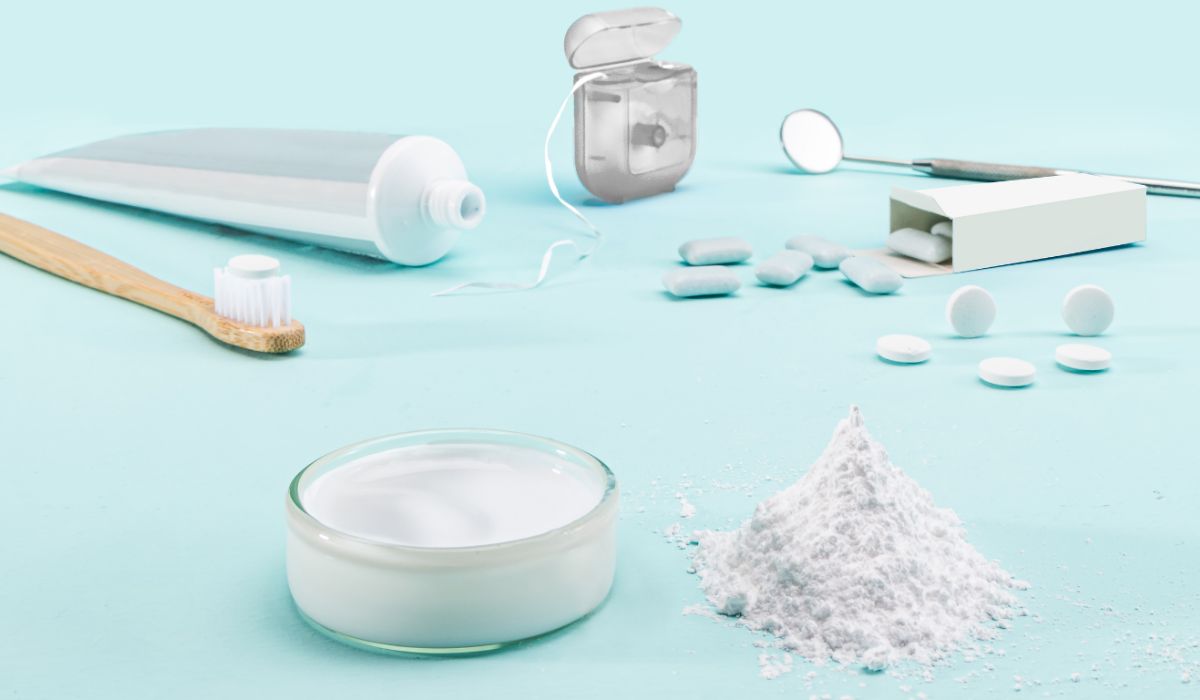
Your teeth face daily damage from food acids, bacteria, and lifestyle habits. This damage causes weakening of enamel and sensitivity over time, even basic tasks such as drinking cold water are painful. Owing to this, the current population seeks improved means of preserving their teeth naturally. It is at that point that hydroxyapatite is useful. It is not a new chemical; it is a mineral already in your teeth and bones. This renders it more compatible with your body than most other ingredients. Due to this, this toothpaste is becoming popular in the sense that it can repair enamel rather than just protecting it.
This article will explain what hydroxyapatite is, how it functions and why it is gaining popularity as a contemporary oral care product. You will also get to know how it is compared to fluoride and whether it is safe to be used on a daily basis.
Table of Contents
What Is Hydroxyapatite?
Hydroxyapatite is a mineral that occurs naturally; it is composed of calcium and phosphate. It is the primary composition of your tooth enamel that implies that your teeth are already relying on it to be strong. Due to this, the consumption of this mineral in toothpaste aids your natural system of repairing your teeth. Intriguingly, the synthesis of hydroxyapatite was created in the 1970s by scientists to address a particular issue. Zero gravity in space is causing astronauts to lose minerals; researchers had to come up with a method of replenishing enamel. Consequently, it was offered in toothbrushes and it was eventually offered to the general population.
How Hydroxyapatite Works on Tooth Enamel
When you eat sugary or acidic foods, your enamel loses essential minerals. This is very weakening to your teeth and it forms little cracks which are not seen by the naked eye. Nevertheless, it is an effective way of mitigating this damage. It sticks to the surface of enamel and seeps into vesicles. In addition, it replenishes calcium and phosphate that strengthens the enamel layer in the long run. This makes your teeth resistant to damage in future.
Working Mechanism in Simple Steps
- Acids remove minerals from enamel
- Hydroxyapatite binds to weak spots
- Minerals get restored gradually
- A protective layer forms on teeth
One dental specialist described that hydroxyapatite creates a protective coating on the teeth that receives the acid attacks prior to the damage of the enamel. This renders it an effective instrument in day-to-day oral care. Hence, such a remineralization process makes your teeth healthier and stronger as they are used regularly.
Hydroxyapatite vs Fluoride Toothpaste Comparison
Hydroxyapatite and fluoride are both useful in dentistry. However, they do this differently, thus creating confusion to the users. The fluoride restores the enamel structure directly, although in the process of forming a protective compound.
Comparison Table
| Factor | Hydroxyapatite | Fluoride |
| Function | Rebuilds enamel | Strengthens enamel |
| Research history | Newer | Established for decades |
| Availability | Limited | Widely available |
| Sensitivity relief | Strong | Moderate |
Due to this distinction, hydroxyapatite is viewed by many as a more natural method by many people. Meanwhile, the fluoride is still highly rated because it has a long history of use. So, it is recommended, according to many dentists, to resort to the combination of both alternatives rather than using only one.
Benefits of Hydroxyapatite for Dental Health
Hydroxyapatite has several advantages other than simple cleaning. It is active and works to restore and preserve teeth and that is why it is not similar to ordinary toothpaste products. With the increasing number of research, more users claim to have positive changes in their oral health.
Key Benefits:
- It strengthens enamel by restoring lost minerals
- It reduces tooth sensitivity significantly
- It improves the smoothness of the tooth surface
- It enhances natural whiteness over time
For example, an individual who used to take coffee often changed to this mineral toothpaste. In several weeks, the dentality became less sensitive and the teeth were seen to be clean and brighter. Thus, the visible improvements can be provided with consistent use.
Safety of Hydroxyapatite in Daily Oral Care
When making a decision about dental products, safety is one of the key issues. Fortunately, its safety profile is positive according to the existing studies. It does not damage the tissues of the mouth and does not become unstable even when taken in low doses. The body will also be in a position to control the amount of calcium thus reducing the risks of complications. Due to this reason, it is regarded as being safe for both adults and children.
| Safety Aspect | Status |
| Toxicity level | Very low |
| Safe for children | Yes |
| Cell damage risk | Not observed |
| Body absorption | Controlled |
Furthermore, researchers have found that hydroxyapatite is not harmful to DNA and it does not induce severe health complications. As such, it can be used in the long term.
Nano Hydroxyapatite and Its Advanced Role
Nano hydroxyapatite has a fine variety of particles. It is larger and, therefore, can get deeper into cracks in the enamels and offer a superior repair. Consequently, it has a better coverage than standard hydroxyapatite.
Applications of Nano Hydroxyapatite
- Deep enamel repair
- Dental implant coating
- Bone regeneration support
- Gum health improvement
Moreover, the dental practitioners also apply nano-hydroxyapatite in advanced procedures like implants and bone reconstruction. This demonstrates its high compatibility with the human body. This technology is still developing and there are researchers who are still researching on the long-term benefits of this technology.
Limitations of Hydroxyapatite
Even though hydroxyapatite has got a number of advantages, it possesses some limitations. Consequently, when equipped with such disadvantages, making a wise choice is possible.
Common Limitations
- Limited long-term clinical research
- Higher cost compared to regular toothpaste
- Not widely approved in some regions
- Availability mainly online
Price Comparison
| Product Type | Average Price |
| Hydroxyapatite toothpaste | ₹400–₹1200 |
| Fluoride toothpaste | ₹80–₹300 |
Thus, the idea of using hydroxyapatite along with conventional toothpaste is popular among users rather than using it completely.
Hydroxyapatite for Children and Sensitive Users
There is always the concern that toothpaste is not safe to children. As children have a habit of swallowing toothpaste, it is significant to select one that is safe. It provides a back-up solution to such situations.
Why It Works for Kids
- Safe when swallowed in small amounts
- Supports early enamel strengthening
- Gentle on sensitive teeth
It is non-fluoroscarring and enhances mild enamel remediation. Also, it becomes effective in safeguarding the developing teeth with no severe side effects. Nonetheless, it is always preferable to seek a dentist prior to changing the routine of a child in terms of oral care.
Conclusion:
Hydroxyapatite is revolutionizing the current dental practice by its capability to restore enamel directly. It makes teeth stronger, less sensitive and offers a safe alternative to a large number of people who use it. Although research is still in its infancy, benefits of the research make the research one of the most promising alternatives to be used in day-to-day life. You may also apply hydroxyapatite toothpaste on top of your current oral care routine in case you would like to add something that will benefit your routine. This moderation process allows for keeping teeth strong and healthy throughout the ages.
Also Read About :- Legacy Barbershop