Food security in Bihar is not a distant policy concept. It affects everyday life for millions of families who depend on subsidized food grains to manage household expenses. For many years, ration card services involved delays, confusion, and repeated visits to government offices, which created stress for citizens. To solve these long-standing problems, the Bihar government introduced Jan Vitran Ann as a digital ration management system.
This platform allows eligible residents to apply for ration cards, track applications, and manage corrections online. Over time, Jan Vitran Ann has become an essential part of Bihar’s public distribution system, improving transparency and reducing dependency on manual processes.
Table of Contents
What Is Jan Vitran Ann?
Jan Vitran Ann is Bihar’s official online system for managing ration card services under the Public Distribution System. It connects citizens directly with government food distribution channels through a transparent digital framework. The purpose of this system is to ensure that subsidized food grains reach eligible households without delay or misuse.
Earlier, many families faced issues such as missing names, incorrect card details, or long approval times. With the introduction of Jan Vitran, these challenges are handled through verified online processes. As a result, beneficiaries gain clarity, while authorities maintain accurate and updated records.
Jan Vitran Ann Bihar and the Need for Digital Reform
The scale of ration distribution in the state is massive, which made manual systems difficult to control. Because of this, Jan Vitran Bihar was introduced to reduce leakages and improve accountability across districts. Digitization allowed better tracking of beneficiaries and ensured Aadhaar-based verification.
Additionally, the system helped reduce duplicate ration cards and ensured that benefits reached genuine households. Over time, this digital shift restored confidence among citizens who earlier struggled with unclear procedures.
Jan Vitran Ann and the Structure of Ration Card Categories
Ration cards issued under Jan Vitran are divided into categories based on income and vulnerability. This classification helps distribute food grains fairly while prioritizing families that need support the most. Each category receives benefits according to national and state food security norms.
Before looking at the table, it is important to understand that these categories are decided through verified household data and eligibility checks.
| Ration Card Category | Eligible Families | Monthly Benefit |
| Antyodaya (AAY) | Extremely poor households | 35 kg food grains |
| Priority Household (PHH) | NFSA-eligible families | 5 kg per person |
| BPL | Low-income families | Subsidized grains |
| APL | Higher-income households | Limited or no subsidy |
This structured approach ensures fairness and prevents misuse of resources. After allocation, beneficiaries receive food grains through designated fair price shops.
Jan Vitran Services Available to Citizens
Jan Vitran Ann is designed as a complete ration service platform rather than a single-purpose portal. Citizens can manage most ration-related needs online without depending on intermediaries. This has been especially helpful for elderly residents and rural households.
The platform supports ration card applications, application tracking, correction requests, Aadhaar linking, and list downloads. Because these services are integrated, beneficiaries can move from application to approval smoothly while staying informed at each stage.
Ration Card Application Process Explained
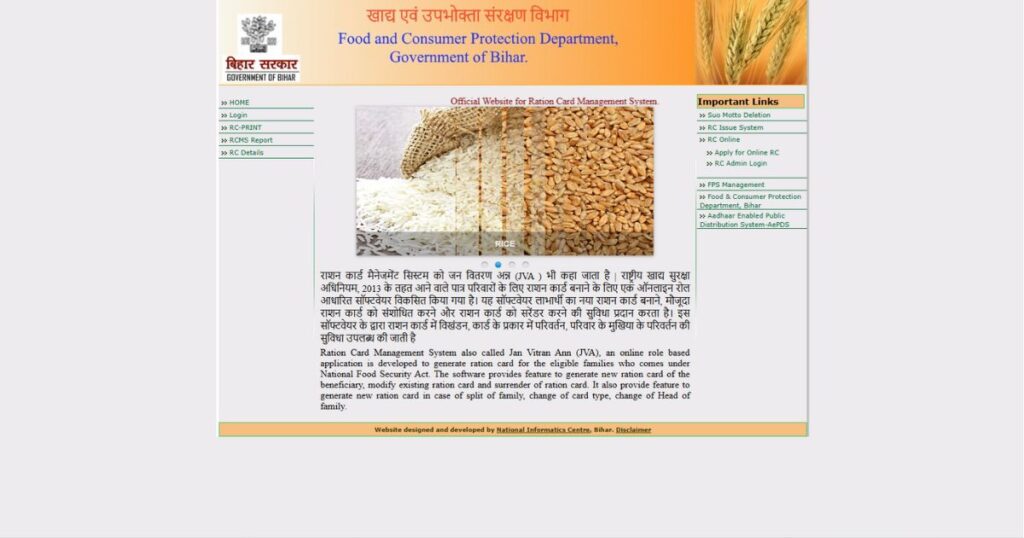
The online application system follows a structured flow that helps avoid confusion and errors. Each stage guides the applicant forward, from login to final submission. Careful attention at every step ensures faster verification and approval.
Step 1: Visit the Official Portal
Start by opening the official website at epds.bihar.gov.in. This portal is the central platform for all ration card–related services. Make sure you use a stable internet connection before proceeding.
Step 2: Choose the Online Application Option
On the homepage, locate and click on the option labeled “Apply for Online RC.” This section directs you to the ration card application interface. Reading the instructions on the page helps avoid mistakes later.
Step 3: Log In or Register Yourself
Applicants must log in using their Meri Pehchaan authentication credentials. If you are a new user, complete the registration process first by providing basic identification details. Successful login gives access to the application form.
Step 4: Select Application Type
After logging in, choose “New Apply” and then select whether the application is for a Rural or Urban area. This selection ensures the form matches your location-based requirements. Choosing the correct option is important for accurate processing.
Step 5: Fill in Personal and Family Details
Enter your personal information carefully, including your name, address, and family member details. All information should match your official documents to avoid verification issues. Reviewing entries at this stage helps prevent delays.
Step 6: Upload Required Documents
Upload clear and readable copies of all required documents. These usually include Aadhaar card, bank details, residential proof, a family photograph, and income proof. Proper uploads improve the chances of quick approval.
Step 7: Verify and Submit the Application
Before clicking “Final Submit,” review all the details displayed on the screen. Once submitted, changes become difficult until the correction stage. After submission, note the reference number for future tracking.
Step 8: Track Application Status
The system allows applicants to monitor their application status online at any time. Regular tracking helps you stay updated on verification progress. This feature removes uncertainty and keeps the process transparent.
Documents Required Under Jan Vitran Ann
Having complete and accurate documents is essential for approval. Many delays occur due to unclear or outdated information, which can be avoided with proper preparation. Jan Vitran Ann verifies documents digitally to ensure authenticity.
Commonly required documents include Aadhaar cards of all family members, address proof, bank account details, a family photograph, and income-related declarations. Clear document uploads improve verification speed and reduce chances of rejection.
Jan Vitran Ann Application Status Tracking System
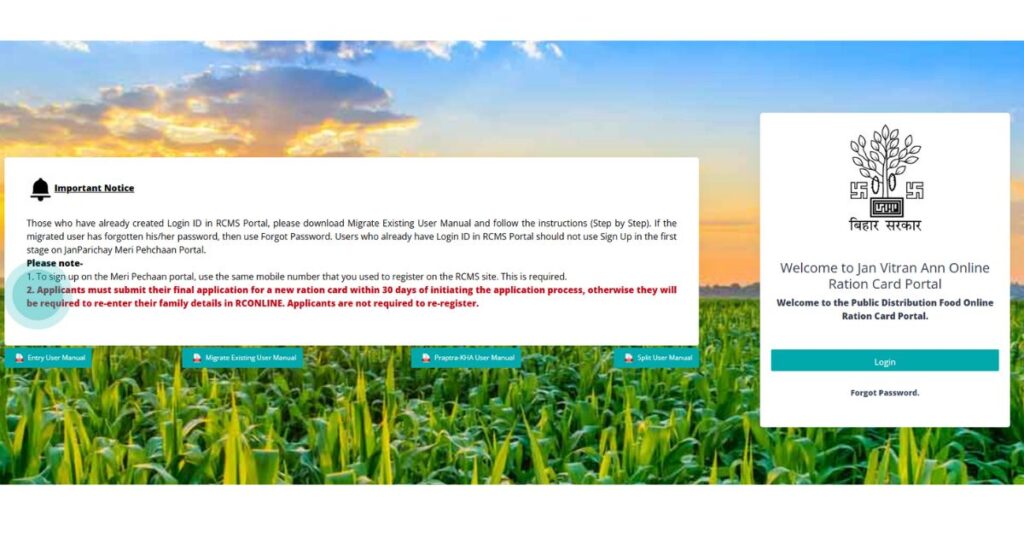
The Jan Vitran Ann Bihar system allows applicants to track their ration card request at any time. By using a few basic details, you can see whether your application is under review, approved, or requires further action. This online method saves time and reduces unnecessary follow-ups.
Step 1: Open the Official Status Portal
Start by visiting the official ration card status website at rcms.bihar.gov.in. This portal is dedicated to tracking ration card applications submitted through the state system. Make sure you have a stable internet connection for smooth access.
Step 2: Select the Application Status Option
On the homepage, locate and click the “Application Status” option. This section is specifically meant for applicants who want to check the progress of their ration card request. Once selected, a new page will open for further details.
Step 3: Choose District and Subdivision
Next, select your district and subdivision from the available dropdown menus. These details help the system locate your application accurately. Choosing the correct location is important for displaying the right status information.
Step 4: Enter the RTPS Reference Number
Carefully enter your RTPS number in the given field. This number is provided at the time of application submission and acts as a unique tracking reference. Double-check the number to avoid errors.
Step 5: View the Current Application Status
After entering all required details, click the “Show” button. The screen will display the latest status of your ration card application. You can see whether it is pending, approved, or under verification.
Ration Card List and Digital Access
After approval, beneficiaries can check their name in the ration card list. It provides district-wise and village-wise access to these lists. Digital copies of ration cards can also be downloaded when required.
This digital availability proves helpful during verification at fair price shops or when physical cards are misplaced. It also supports portability and convenience for migrant families.
Correction of Errors Through Jan Vitran Ann
The online correction facility is designed to be simple and structured. Each stage helps verify information carefully so that updates are accurate and officially approved before being reflected in the system.
Step 1: Open the Official Ration Portal
Begin by visiting the official ration service website at epds.bihar.gov.in. This portal provides access to all ration-related services, including correction requests. Make sure you use a stable internet connection to avoid interruptions during the process.
Step 2: Choose the Correction Option
After reaching the homepage, locate and select the option labeled “Apply For Correction.” This section is specifically meant for updating or modifying existing ration card details. Selecting the correct option ensures your request reaches the right department.
Step 3: Enter Required Information Carefully
In this step, you need to fill in your ration card details and choose the type of correction needed. Information such as name, address, or family member details should be entered exactly as per supporting documents. Accuracy at this stage helps prevent rejection or delays.
Step 4: Upload Supporting Documents
Upload the necessary documents that justify the requested correction. These documents are used for verification purposes, so clarity and correctness are important. Blurred or incorrect files may slow down the approval process.
Step 5: Submit Request and Monitor Status
Once all details and documents are uploaded, submit the correction request. After submission, you can track the status online using the provided reference details. Regular monitoring helps you stay informed about approval progress.
Role of EPDS
The Electronic Public Distribution System works alongside Jan Vitran Ann to manage backend operations. While Jan Vitran handles citizen-facing services, EPDS ensures supply chain monitoring and fair price shop accountability.
Together, both systems maintain stock tracking, Aadhaar authentication, and monthly allocation monitoring. This coordination strengthens transparency across the distribution network.
Bihar Ration Distribution Overview
Understanding the scale of ration distribution highlights why digital systems were necessary. Jan Vitran Ann Bihar supports one of the largest beneficiary networks in the country. The figures below show the reach and efficiency achieved through digitization.
Before reviewing the table, it is useful to note that these numbers reflect ongoing improvements rather than static data.
| Distribution Metric | Approximate Figures |
| Total beneficiaries | 8.7 crore+ |
| Ration cards issued | 1.6 crore+ |
| Fair price shops | 54,000+ |
| Digitized ration cards | 99% |
| Aadhaar-linked cards | 90% |
These figures demonstrate how technology improved control, coverage, and transparency statewide.
Common Challenges and Practical Solutions
Even with digitization, ration services face real-world challenges that affect daily users. Jan Vitran Ann addresses many of these issues, though awareness and correct usage remain equally important. Understanding common problems helps families avoid delays and confusion during applications or corrections.
1. Connectivity and Access Limitations
Internet access in rural areas remains inconsistent, which can slow application submissions. Many users rely on shared devices or public centers for access. Planning submissions during stable connectivity periods often reduces errors and incomplete uploads.
2. Document Mismatch Issues
Incorrect Aadhaar details or outdated address proofs frequently delay verification. Small spelling differences across documents cause system rejections. Careful review before submission prevents repeat correction requests.
3. Lack of Application Tracking Awareness
Some applicants remain unaware of online tracking features. Without checking status updates, families assume rejection prematurely. Regular status monitoring improves clarity and reduces unnecessary follow-ups.
Helpline Support
Human assistance remains important alongside digital systems. It provides toll-free helpline numbers for unresolved issues. These helplines assist with status checks, correction requests, and general queries.
Timely communication through official channels helps prevent misinformation and confusion among beneficiaries.
Conclusion:
Jan Vitran Ann has reshaped ration card services in Bihar by replacing uncertainty with clarity and control. Through Jan Vitran Ann, eligible families can access subsidized food grains without repeated visits or dependency on intermediaries. The platform strengthens trust, improves efficiency, and ensures dignity in food access. For households relying on public distribution, Jan Vitran continues to serve as a reliable foundation for food security and administrative transparency.
Read Our More Blogs: PNB HRMS 2.0 Explained: Login, Payroll, Leave & Records